Edible Oil Production Equipment Turnkey Solutions: Revolutionizing the Industry in 2026
Table of Contents
Introduction
The chemical industry is on the cusp of a major transformation, driven by a confluence of technological advancements, evolving consumer preferences, and pressing environmental concerns. In 2026, the industry is poised to witness a wave of innovations that will not only redefine the way chemicals are produced and used but also address some of the most pressing challenges facing the world today.
This blog post will delve into the top 5 trends that are expected to have a profound impact on the chemical industry in 2026, providing detailed analysis, real-world examples, and actionable insights for industry stakeholders.

Sustainable Manufacturing: Paving the Way for a Greener Future
Sustainability has emerged as a critical driver of change in the edible oil industry, as companies increasingly recognize the need to reduce their environmental footprint and operate in a more responsible manner. In 2026, sustainable manufacturing practices will become even more prevalent, with a focus on:
- Green Production Processes: The development and adoption of production processes that minimize or eliminate the use and generation of hazardous substances. For example, companies are exploring the use of renewable energy sources, such as solar and wind power, to power their production facilities. This not only reduces reliance on non-renewable resources but also helps to lower greenhouse gas emissions.
- Energy Efficiency: The implementation of energy-efficient technologies and processes to reduce energy consumption and costs. This includes the use of advanced control systems, heat recovery technologies, and energy-efficient equipment.
- Circular Economy: The transition towards a circular economy model, where resources are reused and recycled to minimize waste and maximize value. This involves the development of closed-loop systems that enable the recovery and reuse of waste products, such as by-products from oil extraction.
Case Study: A Sustainable Success Story
One company that has successfully embraced sustainable manufacturing practices is a leading edible oil manufacturer based in Asia. The company has invested heavily in green production processes, resulting in the development of a new range of eco-friendly edible oil products that are made from sustainable raw materials and have a significantly lower environmental impact than traditional alternatives.
In addition, the company has implemented a number of energy efficiency measures, such as the installation of solar panels and the optimization of production processes, which have helped to reduce its energy consumption by 30% over the past five years. As a result of these efforts, the company has not only improved its environmental performance but also gained a competitive edge in the market, attracting a growing number of customers who are increasingly demanding sustainable products. This case study exemplifies how sustainable manufacturing is one of the key edible oil production equipment turnkey solutions 2026 trends.
AI-Driven Research and Development: Accelerating Innovation
Artificial intelligence (AI) is revolutionizing the way research and development are conducted in the edible oil industry. In 2026, AI will play an even more prominent role, enabling companies to accelerate the discovery and development of new edible oil products, optimize production processes, and improve product quality. Some of the key applications of AI in the edible oil industry include:
- Predictive Modeling: The use of AI algorithms to predict the properties and performance of edible oil products, reducing the need for costly and time-consuming laboratory experiments. This allows companies to quickly identify promising new candidates and focus their resources on the most promising areas of research.
- Process Optimization: The application of AI to optimize edible oil production processes, improving efficiency and reducing waste. AI-powered systems can analyze real-time data from production lines and make adjustments to process parameters in real-time, ensuring that processes are operating at peak performance.
- Quality Control: The use of AI to monitor and control the quality of edible oil products, ensuring that they meet all applicable standards and regulations. AI algorithms can analyze data from sensors and other monitoring devices to detect defects and anomalies in real-time, enabling companies to take corrective action before products are released to the market. AI-driven research and development is another crucial edible oil production equipment turnkey solutions for 2026.
The Impact of AI on the Edible Oil Industry
The adoption of AI in the edible oil industry is expected to have a significant impact on innovation and productivity. According to a recent report by McKinsey, AI could potentially increase the productivity of the edible oil industry by up to 40% by 2030, enabling companies to bring new products to market faster and at a lower cost.
In addition, AI can help to improve the safety and sustainability of edible oil production processes, reducing the risk of accidents and environmental pollution.
Digitalization and Industry 4.0: Transforming Operations
Digitalization and Industry 4.0 are transforming the way the edible oil industry operates, enabling companies to improve efficiency, reduce costs, and enhance customer service. In 2026, we can expect to see even greater adoption of digital technologies, such as:
- Internet of Things (IoT): The use of sensors and connected devices to collect real-time data from production lines, warehouses, and supply chains. This data can be used to monitor and optimize operations, improve quality control, and predict maintenance needs.
- Big Data Analytics: The analysis of large datasets to gain insights into customer behavior, market trends, and operational performance. This information can be used to make more informed business decisions, develop new products and services, and improve customer satisfaction.
- Cloud Computing: The use of cloud-based platforms to store and process data, enabling companies to access and share information from anywhere in the world. This not only reduces the need for on-premise IT infrastructure but also provides greater flexibility and scalability. Digitalization is one of the most impactful edible oil production equipment turnkey solutions for 2026.
The Benefits of Digitalization for the Edible Oil Industry
The adoption of digital technologies in the edible oil industry offers some benefits, including:
- Improved Efficiency: Digital technologies can help to automate processes, reduce manual labor, and improve the accuracy and speed of operations. This can lead to significant cost savings and increased productivity.
- Enhanced Customer Service: Digital technologies can enable companies to provide better customer service by providing real-time information, personalized recommendations, and faster response times.
- Increased Agility: Digital technologies can help companies to respond more quickly to changing market conditions and customer demands, enabling them to stay ahead of the competition.
The Rise of Specialty Oils: Meeting the Needs of a Changing World
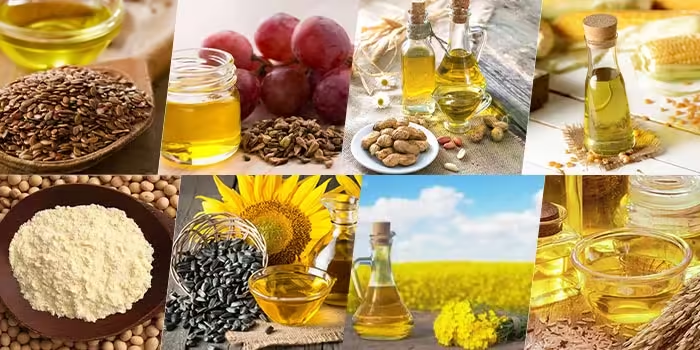
The demand for specialty oils is expected to grow significantly in 2026, driven by a number of factors, including the increasing focus on health and wellness, the growth of emerging markets, and the development of new technologies. Specialty oils are used in a wide range of applications, including cooking, cosmetics, and pharmaceuticals, and offer a number of advantages over traditional edible oils, such as:
- High Nutritional Value: Specialty oils are rich in essential nutrients, such as vitamins, minerals, and antioxidants, which are beneficial for human health.
- Unique Flavor and Aroma: Specialty oils have a unique flavor and aroma that can enhance the taste of food and beverages.
- Sustainability: Many specialty oils are made from sustainable raw materials and have a lower environmental impact than traditional edible oils, making them more attractive to environmentally conscious customers. The rise of specialty oils is an important edible oil production equipment turnkey solutions 2026 trends.
Market Trends and Opportunities
The global specialty oils market is expected to grow at a compound annual growth rate (CAGR) of 5.5% from 2021 to 2026, reaching a value of $650 billion by 2026. The growth of the market is being driven by a number of factors, including the increasing demand for health and wellness products, the growth of the cosmetics and pharmaceutical industries, and the development of new technologies, such as cold-pressing and extraction methods. In addition, the rise of emerging markets, such as China and India, is expected to provide significant opportunities for specialty oil manufacturers, as these countries continue to invest in infrastructure development and industrialization.
Regulatory Compliance: Navigating a Complex Landscape
The edible oil industry is subject to a wide range of regulations and standards, designed to ensure the safety of workers, protect the environment, and ensure the quality of edible oil products. In 2026, regulatory compliance will become even more important, as governments around the world continue to strengthen environmental and safety regulations. Companies will need to invest in compliance management systems and processes to ensure that they are meeting all applicable regulations and standards. Regulatory compliance is a key edible oil production equipment turnkey solutions 2026 trend that companies must address.
Key Regulatory Trends
Some of the key regulatory trends that are expected to impact the edible oil industry in 2026 include:
- Stricter Environmental Regulations: Governments around the world are expected to introduce stricter environmental regulations, aimed at reducing greenhouse gas emissions, improving air and water quality, and protecting biodiversity. This will require companies to invest in new technologies and processes to reduce their environmental footprint.
- Increased Focus on Safety: There will be an increased focus on workplace safety, with governments and regulatory bodies introducing new regulations and standards to ensure the safety of workers. Companies will need to implement comprehensive safety management systems and provide training to employees to ensure that they are aware of and comply with all applicable safety regulations.
- Product Stewardship: There will be a greater emphasis on product stewardship, with companies being held responsible for the entire lifecycle of their products, from production to disposal. This will require companies to develop and implement comprehensive product stewardship programs, including the collection and recycling of waste products.
The Cost of Non-Compliance
Failure to comply with regulatory requirements can have serious consequences for edible oil companies, including fines, legal action, reputational damage, and business losses. Furthermore, non-compliance can lead to environmental pollution and harm to human health, resulting in long-term impacts on both the company and the community. Therefore, companies must take compliance issues seriously and invest the necessary resources and processes to ensure adherence to all applicable regulations and standards.
It is therefore essential for companies to take regulatory compliance seriously and invest in the necessary resources and processes to ensure that they are meeting all applicable regulations and standards.

Table: Comparison of Key Trends in the Edible Oil Industry
| Trend | Description | Impact |
|---|---|---|
| Sustainable Manufacturing | Focus on green production processes, energy efficiency, and circular economy | Reduced environmental footprint, improved brand reputation, and increased competitiveness |
| AI-Driven Research and Development | Use of AI for predictive modeling, process optimization, and quality control | Accelerated innovation, improved productivity, and reduced costs |
| Digitalization and Industry 4.0 | Adoption of IoT, big data analytics, and cloud computing | Improved efficiency, enhanced customer service, and increased agility |
| The Rise of Specialty Oils | Growing demand for high-nutritional value, unique flavor, and sustainable oils | New market opportunities, increased profitability, and differentiation |
| Regulatory Compliance | Stricter environmental, safety, and product stewardship regulations | Increased costs, improved safety and environmental performance, and enhanced reputation |
Conclusion
The edible oil industry is undergoing a period of significant change and transformation, driven by a number of key trends and developments. In 2026, the industry will continue to evolve, with a focus on sustainability, innovation, and digitalization. Companies that are able to adapt to these changes and embrace new technologies and business models will be well-positioned to succeed in the future. Understanding and leveraging these edible oil production equipment turnkey solutions 2026 trends is crucial for companies looking to thrive in the evolving edible oil industry landscape.
FAQ
What is sustainable manufacturing in the edible oil industry?
Sustainable manufacturing in the edible oil industry focuses on green production processes, energy efficiency, and circular economy models to reduce environmental impact.
How does AI drive innovation in edible oil research?
AI accelerates innovation by predicting edible oil properties, optimizing production processes, and ensuring product quality through data analysis.
What are the benefits of digitalization for edible oil companies?
Digitalization improves efficiency, enhances customer service, and increases agility through IoT, big data analytics, and cloud computing.
Why are specialty oils growing in demand?
Specialty oils offer high nutritional value, unique flavor, and sustainability, meeting the needs of health-conscious and environmentally aware consumers.
What are the key regulatory trends for the edible oil industry in 2026?
Key regulatory trends include stricter environmental regulations, increased focus on workplace safety, and emphasis on product stewardship.