
Comparing Soybean Oil Production Methods with Other Leading Vegetable Oils
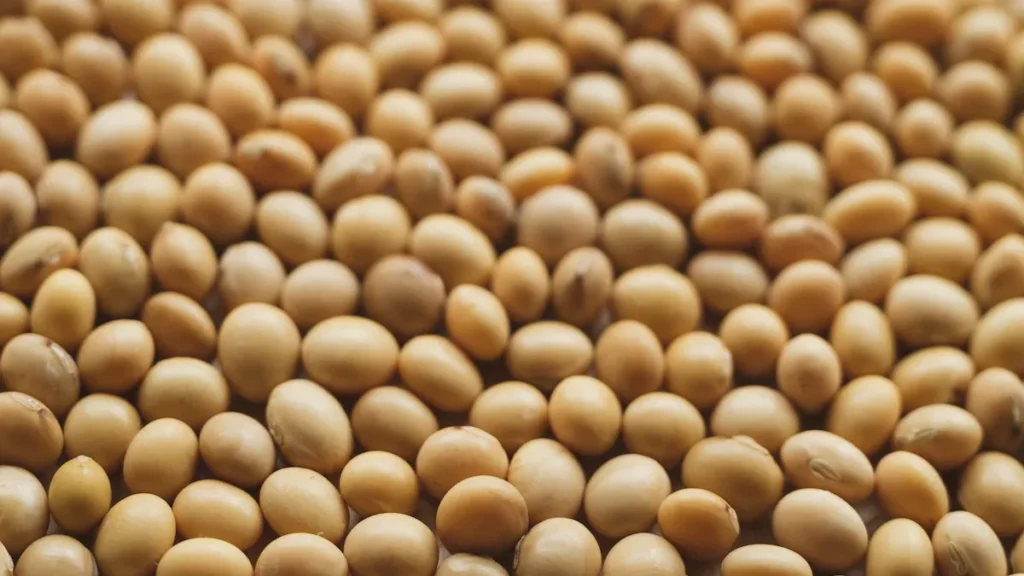
You see soybean oil leading the market, with the United States producing more than half of its vegetable oils from soybeans. Production methods shape efficiency, sustainability, cost, and oil quality. If you care about eco-friendly choices, you join over 80% of consumers willing to pay more for sustainably produced goods. Chemsta, with nearly 50 years of experience and advanced technology like D.T.D.C and ASME-certified vessels, helps you achieve better results in Soybean Oil Production and other oils. When you compare soybean, canola, sunflower, and palm oil, you understand how each method affects your business and daily life.
| Aspect | Impact |
|---|---|
| Efficiency | New extraction methods can reduce production costs and improve efficiency. |
| Environmental Impact | Technological advances can lead to more sustainable practices in oil production. |
| Cost | Automation in production helps to lower costs. |
| Oil Quality | New processing techniques enhance the quality of the oil produced. |
Learn more about sustainable solutions at https://chemsta.net/.
Key Takeaways
- Soybean oil leads the vegetable oil market, making up over 86% of the U.S. market share in 2024.
- Advanced extraction methods, like solvent extraction, maximize oil yield and improve efficiency in soybean oil production.
- Sustainable practices in oil production are increasingly important, with over 80% of consumers willing to pay more for eco-friendly options.
- Each vegetable oil has unique properties; for example, canola oil is favored for its mild flavor and high smoke point.
- Palm oil has the highest yield per hectare, but its production raises significant environmental concerns, including deforestation.
- Understanding the refining process is crucial; it enhances oil quality and safety, ensuring compliance with food standards.
- By-products from soybean oil production, like lecithin and hulls, can be repurposed for animal feed and pharmaceuticals, reducing waste.
- Staying informed about market trends and technological innovations can help producers improve efficiency and sustainability in oil production.
Leading Vegetable Oils Overview
Soybean Oil Market Share
You see soybean oil leading the vegetable oil industry in both the United States and worldwide. This oil dominates the American market, holding an impressive 86.2% share in 2024. The U.S. soybean oil market is projected to reach $14.81 billion by 2032, showing strong growth. Globally, the soybean oil market was valued at $51.23 billion in 2023 and is expected to grow to $68.42 billion by 2032, with a steady annual growth rate of 3.28%. The Asia Pacific region stands out, accounting for 46.52% of the global soybean oil market share in 2023.
- The conventional soybean oil segment holds 86.2% of the U.S. market in 2024.
- The U.S. market is projected to reach $14.81 billion by 2032.
- The global market is expected to grow from $52.86 billion in 2024 to $68.42 billion by 2032.
- Asia Pacific leads with 46.52% of global market share.
You can see why soybean oil remains a staple in kitchens and food industries around the world.
Canola Oil Profile
Canola oil ranks among the top vegetable oils due to its light flavor and health benefits. Canada leads global production, contributing nearly 11 million metric tons. In 2024, Canada produced about 20 million metric tons, while China and India followed with 15.6 million and 12.1 million metric tons, respectively. The European Union also plays a significant role, producing about 19.5 million metric tons in 2022, with a forecast of around 19 million tons by 2025.
- Canada is the largest producer, with nearly 11 million metric tons.
- The European Union produced about 19.5 million metric tons in 2022.
- China and India produced 15.6 and 12.1 million metric tons in 2024.
You often find canola oil in salad dressings, frying, and baking because of its neutral taste and high smoke point.
Sunflower Oil Profile
Sunflower oil stands out for its light taste and high vitamin E content. You benefit from its versatility in cooking and its nutritional value. The world produced about 20.3 million metric tons of sunflower oil, with Russia and Ukraine as the top producers.
| Country | Production (millions of tonnes) |
|---|---|
| Russia | 6.0 |
| Ukraine | 4.6 |
| Argentina | 1.5 |
| Turkey | 0.9 |
| Bulgaria | 0.8 |
| Hungary | 0.7 |
| World | 20.3 |
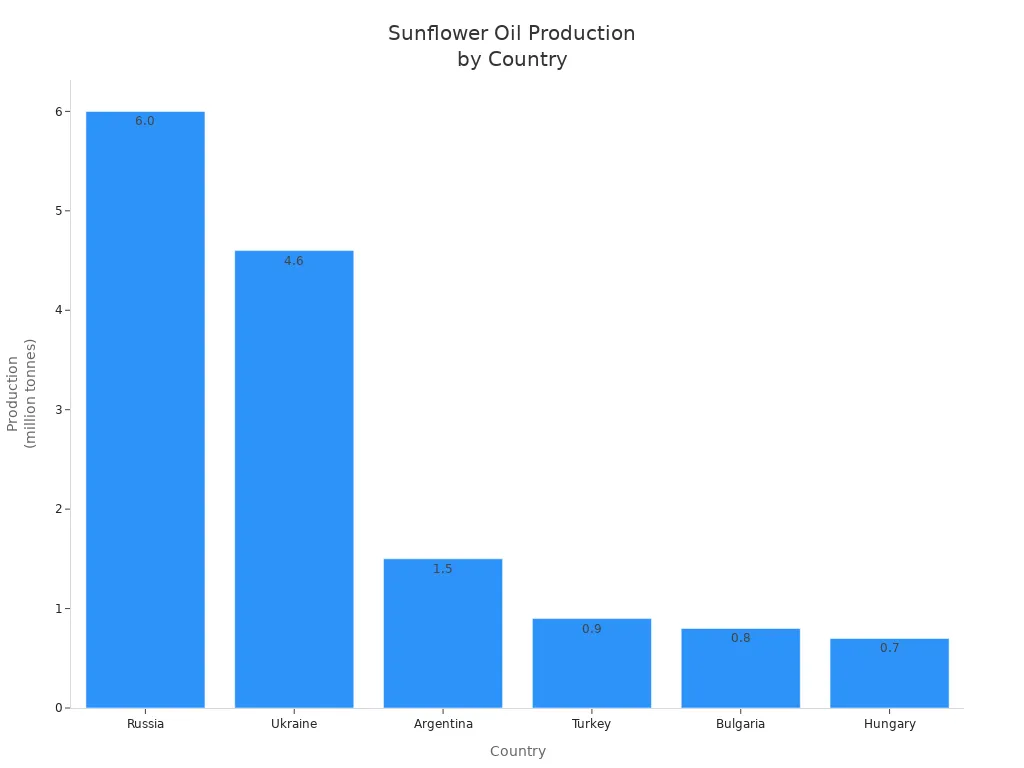
Sunflower oil contains 884 calories per 100 grams and provides 274% of your daily vitamin E needs. You can choose from four main types, each with different fatty acid profiles: high-linoleic, high-oleic, mid-oleic, and high-stearic combined with high-oleic. This variety lets you select the best oil for your health and cooking needs.
Palm Oil Profile
You see palm oil everywhere, from cooking oils to packaged foods. Palm oil stands out because of its high yield and global production volume. You notice that palm oil plantations produce more oil per hectare than any other leading vegetable oil. The average yield reaches 3.5 tonnes per hectare, which is much higher than sunflower, rapeseed, coconut, or groundnut oils.
Here is a comparison of oil yields and production volumes:
| Oil Type | Yield (tonnes per hectare) | 2023-2024 Production (million tonnes) |
|---|---|---|
| Palm Oil | 3.5 | 77.3 |
| Sunflower Oil | 0.7 | N/A |
| Rapeseed Oil | 0.7 | N/A |
| Coconut Oil | 0.3 | N/A |
| Groundnut Oil | 0.3 | N/A |
You see that palm oil production reached 77.3 million tonnes in 2023-2024. This number far exceeds the output of other vegetable oils. You find that two countries dominate palm oil production:
- Indonesia produces 44 million tonnes, which makes up 57% of the world’s supply.
- Malaysia follows with 19.7 million tonnes.
You notice that these two countries account for most of the palm oil you find in stores and restaurants. Palm oil’s popularity comes from its versatility. You use it for frying, baking, and as an ingredient in processed foods. You also see palm oil in cosmetics, soaps, and even biofuels.
Palm oil’s high yield means you need less land to produce more oil. This efficiency helps meet global demand, but you should also consider environmental impacts like deforestation and habitat loss.
Other Vegetable Oils
You find many other vegetable oils in the market, each with unique properties and uses. Coconut oil, for example, has a yield of 0.3 tonnes per hectare. You use coconut oil for cooking, baking, and skin care. Groundnut oil, also known as peanut oil, shares the same yield as coconut oil. You often choose groundnut oil for frying because of its high smoke point and mild flavor.
Olive oil stands out for its health benefits and rich taste. You see olive oil used in salads, dressings, and Mediterranean dishes. Although olive oil production is smaller compared to palm or soybean oil, you value its quality and nutritional profile.
You also encounter corn oil, which is popular in North America. Corn oil works well for frying and baking. You see it in snack foods and salad dressings.
Each vegetable oil offers different advantages. You select oils based on taste, nutrition, and cooking needs. Understanding these options helps you make informed choices for your kitchen and your health.
Soybean Oil Production Methods
Harvesting and Preparation
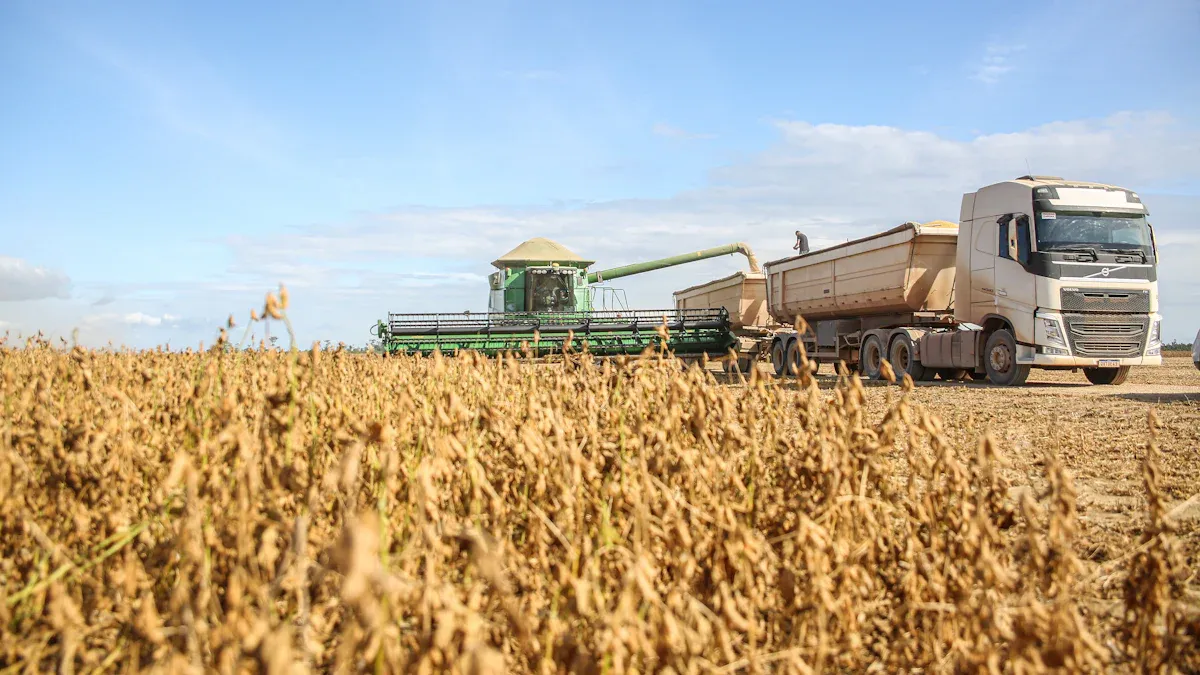
You start Soybean Oil Production by harvesting mature soybeans, usually in late summer or early fall. Farmers use combines to separate the beans from the pods. Timing matters. If you harvest too early or too late, you risk losing oil quality and yield. You must also protect the beans from damage and contamination during harvest. Technology helps you improve efficiency and consistency.
After harvesting, you prepare the beans for processing. You clean them thoroughly to remove dust, stones, and other foreign materials. Specialized equipment ensures that only high-quality beans move forward. Drying comes next. You reduce the moisture content to make oil extraction smoother. Crushing breaks the beans into smaller pieces, and dehulling separates the inner bean from the outer shell. This step improves the quality of the extracted oil.
| Step | Description |
|---|---|
| Harvesting | Collect mature soybeans using combines. |
| Timing | Monitor ripeness to maximize oil yield and quality. |
| Damage Control | Minimize seed damage and contamination. |
| Cleaning | Remove dust, stones, and foreign particles. |
| Drying | Lower moisture content for better extraction. |
| Crushing | Break beans into smaller pieces. |
| Dehulling | Separate inner bean from hulls for higher oil quality. |
Extraction Techniques
After preparation, you move to the extraction phase. This step determines how much oil you can recover from the soybeans. You can choose between mechanical pressing and solvent extraction.
Mechanical Pressing
Mechanical pressing uses machines like screw or hydraulic presses to squeeze oil from the soybean flakes. You benefit from a straightforward process that does not require chemicals. This method gives you oil with fewer impurities and a natural flavor. However, the oil yield is usually lower than with solvent extraction. Chemsta’s advanced expeller systems help you achieve higher oil yields and improved energy efficiency. You also enjoy longer equipment life and flexible processing for different seeds.
Solvent Extraction
Solvent extraction uses organic solvents, often hexane, to dissolve and extract oil from the soybean flakes. You get the highest oil yield with this method. The process involves soaking the flakes in solvent, then separating the oil from the solvent. Chemsta’s D.T.D.C system optimizes steam usage and reduces energy consumption. You benefit from thorough desolventizing, which ensures high-quality oil. The automatic PLC control system keeps the process stable and efficient, while heat and mass transfer improvements prevent oil oxidation.
| Extraction Technique | Description | Yield Characteristics |
|---|---|---|
| Mechanical Pressing | Presses seeds to extract oil using machines. | Lower yield than solvent extraction, but higher than traditional methods. |
| Solvent Extraction | Uses solvents to dissolve and extract oil from flakes. | Highest oil yield among all extraction methods. |
Refining and Purification
Once you extract the crude oil, you refine and purify it to improve quality and safety. You start with degumming, which removes phospholipids and gums by adding water or acid. Next, you neutralize the oil to remove free fatty acids, which can cause off-flavors and reduce shelf life. Bleaching comes after, using adsorbents to remove pigments and trace metals. This step makes the oil clearer and more appealing. Finally, you deodorize the oil with steam distillation to eliminate odors and achieve a neutral taste.
Each refining step matters. High-quality soybean oil should contain less than 0.5% free fatty acids. Chemsta’s advanced refining equipment helps you achieve this standard. The bleaching stage is your last chance to remove non-volatile contaminants. If you leave too many trace elements, you risk off-flavors and a shorter shelf life. By following these steps, you ensure that the final product meets food safety and quality standards.
Tip: Each stage in Soybean Oil Production, from harvesting to refining, plays a key role in determining the final oil quality. Using advanced technology, like Chemsta’s D.T.D.C and ASME-certified vessels, helps you maximize efficiency and sustainability.
By-products and Utilization
When you explore Soybean Oil Production, you discover that the process creates several valuable by-products. These materials do not go to waste. Instead, you find new uses for them in industries like animal feed, pharmaceuticals, and energy.
During refining, you encounter deodorizer distillate. This by-product contains tocopherols and sterols. Tocopherols act as antioxidants, which help preserve food and extend shelf life. Sterols play a role in pharmaceuticals, supporting heart health and lowering cholesterol. You see companies extract these compounds for use in supplements and medicines.
You also notice gums and soapstocks. These materials come from the degumming and neutralization stages. Farmers often use gums and soapstocks as energy sources in livestock diets. Researchers continue to study their effectiveness, but you already see them as a way to reduce waste and support animal nutrition.
Soybean hulls appear after dehulling. You find that these fibrous shells work well in animal feed. They add bulk and provide energy for cattle and other livestock. Some manufacturers use soybean hulls in pet food and even as a source of dietary fiber in specialty products.
Lecithins emerge during the refining process. You recognize lecithin as a natural emulsifier. Food producers add lecithin to chocolate, margarine, and baked goods to improve texture and shelf stability. You also see lecithin in pharmaceuticals and cosmetics.
Spent bleaching clay is another by-product. After the bleaching stage, you can repurpose this clay. Some industries use spent bleaching clay in animal feed, while others find applications in waste treatment and construction materials.
Here is a summary of common by-products and their uses:
| By-product | Main Uses |
|---|---|
| Deodorizer distillate | Antioxidants, pharmaceuticals |
| Gums and soapstocks | Livestock feed, energy source |
| Soybean hulls | Animal feed, dietary fiber |
| Lecithins | Food emulsifier, pharmaceuticals, cosmetics |
| Spent bleaching clay | Animal feed, waste treatment, construction |
You help reduce environmental impact when you find new uses for these by-products. This approach supports sustainability and adds value to the Soybean Oil Production process.
You see that advanced equipment, like Chemsta’s D.T.D.C and ASME-certified vessels, helps you recover and process these by-products efficiently. You create opportunities for innovation and resource conservation. When you choose modern technology, you make your operation more sustainable and profitable.
Other Vegetable Oil Production Methods
Canola Oil Processing
You begin canola oil processing by receiving and cleaning the seeds. This step removes dust, stems, and other contaminants. Canola seeds need special handling because of their small size and high oil content. You condition the seeds by heating them, then flake and cook them to prepare for extraction. These steps help break down cell walls and release more oil.
You extract canola oil using mechanical pressing or solvent extraction. Mechanical pressing squeezes the oil out, while solvent extraction uses chemicals to dissolve and separate the oil. You notice that canola oil processing often combines both methods to maximize yield. Soybean oil production relies more on solvent extraction, so you see a difference in technique.
After extraction, you refine the oil to improve its quality. Refining removes impurities, colors, and odors. You use degumming, neutralization, bleaching, and deodorization to create a clear, mild oil.
| Step | Description |
|---|---|
| 1 | Seed reception and cleaning to remove contaminants. |
| 2 | Seed preparation involving conditioning, flaking, and cooking. |
| 3 | Oil extraction using mechanical pressing or solvent extraction. |
| 4 | Oil refining to improve quality and remove impurities. |
Canola oil’s mild flavor and high smoke point make it popular for cooking and baking.
Sunflower Oil Processing
You process sunflower oil by starting with demucilagination. This step removes mucilage and complex compounds from the seeds. You then neutralize the oil to eliminate free acidity, which improves taste and smell.
You extract sunflower oil by pressing or using solvents. Cold-pressing keeps more nutrients, while solvent extraction increases yield. After extraction, you refine the oil through several stages.
- Degumming: You remove phospholipids and gums.
- Neutralization: You eliminate free fatty acids.
- Bleaching: You filter out pigments and oxidation products.
- Deodorization: You use steam distillation to remove odors.
| Stage | Description | Technology Used |
|---|---|---|
| Pressing or Extraction | Sunflower seeds are mechanically pressed or solvent-extracted to release crude oil. | Cold-pressing, Solvent extraction |
| Refining | Crude oil undergoes multiple refining stages to remove impurities. | Degumming, Neutralization, Bleaching, Deodorization |
| Producing Clear Oil | Final product is transparent, refined oil ready for various applications. | N/A |
You end up with a clear, light oil that works well for frying, baking, and salad dressings.
Sunflower oil contains high levels of vitamin E, which supports your health.
Palm Oil Processing
You process palm oil from the fruit of oil palm trees. You face unique challenges in this industry. Many plantations rely on manual labor in humid climates. Staff shortages have become common, especially since the COVID-19 pandemic. Poor labor practices have led to blacklisting of companies and import bans in some countries.
You can improve palm oil production by using mechanization and modern breeding approaches. These changes help increase yield and support sustainability. You harvest the fruit, then sterilize and press it to extract crude palm oil. You refine the oil to remove impurities and create a product suitable for food and industrial uses.
- Labor issues often affect production efficiency.
- Environmental impacts require you to adopt sustainable practices.
- Mechanization helps you produce more oil with less waste.
Palm oil’s high yield makes it the most widely produced vegetable oil, but you must balance efficiency with responsible practices.

Comparative Analysis of Production Methods
Process Steps Comparison
You notice that each vegetable oil has a unique production process. The steps you follow can affect the oil’s quality, yield, and environmental footprint. Here is a side-by-side comparison of the main process steps for soybean, canola, sunflower, and palm oils:
| Oil Type | Harvesting & Preparation | Extraction Method | Refining Stages | By-products Utilization |
|---|---|---|---|---|
| Soybean | Cleaning, drying, dehulling, crushing | Mechanical pressing or solvent extraction | Degumming, neutralization, bleaching, deodorization | Hulls, lecithin, gums, soapstocks, distillate |
| Canola | Cleaning, conditioning, flaking, cooking | Mechanical pressing and solvent extraction | Degumming, neutralization, bleaching, deodorization | Meal for animal feed, gums, distillate |
| Sunflower | Demucilagination, cleaning, dehulling | Cold-pressing or solvent extraction | Degumming, neutralization, bleaching, deodorization | Hulls, meal, gums, distillate |
| Palm | Fruit sterilization, stripping, pressing | Mechanical pressing | Degumming, neutralization, bleaching, deodorization | Kernel cake, fiber, shells, palm kernel oil |
You see that Chemsta’s turnkey solutions help you streamline these steps. Advanced equipment, such as D.T.D.C and ASME-certified vessels, supports efficient extraction and refining. You benefit from integrated systems that handle everything from raw material intake to final oil purification.
Tip: When you choose modern processing technology, you improve both oil yield and sustainability.
Efficiency and Yield
Efficiency and yield matter when you want to maximize profits and reduce waste. You compare the main vegetable oils and see differences in how much oil you can extract from each crop.
- Palm oil gives you the highest yield per hectare. You get about 3.5 tonnes of oil from one hectare of palm plantation.
- Soybean oil offers moderate yield, but advanced solvent extraction methods help you recover more oil from each bean.
- Sunflower and canola oils provide lower yields per hectare, but you can improve efficiency with better seed varieties and optimized processing.
Here is a quick overview:
| Oil Type | Average Yield (tonnes/hectare) | Typical Extraction Efficiency (%) |
|---|---|---|
| Palm | 3.5 | 90-95 |
| Soybean | 0.4-0.5 | 85-90 |
| Sunflower | 0.7 | 80-88 |
| Canola | 0.7 | 80-90 |
You increase efficiency by using Chemsta’s advanced extraction systems. Automated controls and optimized heat transfer help you reduce energy use and improve oil recovery. You also see that Soybean Oil Production benefits from solvent extraction, which gives you the highest oil yield among all methods.
Note: Higher efficiency means less waste and more profit for your operation.
Environmental Impact
You care about the environment when you choose an oil production method. Each crop and process has a different effect on nature.
- Biodiversity loss: Palm oil production threatens 321 species worldwide. Soybean oil is linked to 73 threatened species. You see that canola and sunflower oils have lower impacts on biodiversity.
- Deforestation: Soybean crops cause major deforestation and loss of natural habitats. Palm oil plantations also drive deforestation, especially in tropical regions.
- Greenhouse gas emissions: Palm oil expansion can release large amounts of greenhouse gases because it often replaces biodiverse forests. Soybean oil production has the highest emissions among leading oils, at 4.25 kilograms of carbon dioxide equivalent per kilogram of refined oil. Rapeseed (canola) oil has the lowest emissions, at about 2.49 kilograms per kilogram.
- Water usage: You notice that sunflower oil requires between 3,800 and 5,000 cubic meters of water per ton. Olive oil uses even more water, but sunflower and canola oils still have significant water footprints.
You reduce environmental impact by adopting sustainable practices and using efficient equipment. Chemsta’s global experience helps you implement solutions that lower emissions and conserve resources.
When you choose advanced technology and responsible sourcing, you protect biodiversity and reduce your carbon footprint.
Cost and Scalability
You want to know how much it costs to produce vegetable oils and how easy it is to scale up your operation. The cost of building and running an oil processing plant depends on several factors. You look at the type of oil, the size of the plant, the technology you use, and the market conditions in your region.
You see that soybean oil leads the global market. Large-scale farms in the United States, Brazil, and Argentina make soybeans the most popular raw material for edible oil, animal feed, and biofuel. You benefit from economies of scale when you process soybeans in bigger facilities. This means you can lower your production costs and increase your profit margin.
Canola and sunflower oil plants also offer good scalability. You find that sunflower oil refining costs change based on the size of your plant, the equipment you choose, and the level of technology. Most sunflower oil producers reach a break-even point in three to five years. You can expect a profit margin between 10% and 15% if you manage your costs well.
Palm oil stands out for its high yield per hectare. You need less land to produce more oil, which helps you scale up quickly. Large plantations in Indonesia and Malaysia supply most of the world’s palm oil. You see that palm oil processing plants can handle huge volumes, making them very scalable.
When you compare extraction methods, you notice differences in cost:
- Solvent extraction gives you a lower oil production cost. You pay about $3.06 for each kilogram of oil produced.
- Mechanical pressing has the lowest fixed costs. You spend about 7 cents for each kilogram of oilseed processed.
- Advanced technology, like Chemsta’s turnkey solutions, helps you reduce energy use and improve efficiency. You can scale up your plant with automated systems and reliable equipment.
Tip: If you want to expand your oil production, choose equipment that supports automation and energy savings. Chemsta’s global experience helps you build scalable plants that meet your needs.
Oil Quality and Applications
You care about the quality of oil you produce because it affects health, taste, and industrial uses. Vegetable oils, including soybean, canola, sunflower, and palm, are important sources of fatty acids. These fatty acids help your body function and support your health.
You find different types of fatty acids in each oil:
- Soybean oil contains polyunsaturated fatty acids, which are good for your heart.
- Canola oil has a high level of monounsaturated fats. You use it for cooking and baking because it has a mild flavor and a high smoke point.
- Sunflower oil is rich in vitamin E and polyunsaturated fats. You choose it for frying and salad dressings.
- Palm oil contains more saturated fats. You see it in processed foods, baked goods, and industrial products.
You learn that saturated fats can raise your risk of heart disease. Oils with more polyunsaturated and monounsaturated fats are better for your health. Long-chain polyunsaturated fatty acids, like arachidonic acid and docosahexaenoic acid, are important for nutrition. You usually get these from marine sources, but vegetable oils still provide many essential fatty acids.
You use vegetable oils in many ways:
- Cooking and frying
- Baking and salad dressings
- Margarine and spreads
- Animal feed
- Biofuel production
- Cosmetics and pharmaceuticals
Note: You improve oil quality by using advanced refining equipment. Chemsta’s technology helps you produce oils with fewer impurities and better nutritional value. You can meet food safety standards and create products for many industries.
Advantages and Disadvantages
Soybean Oil Production Pros and Cons
You find many benefits when you choose Soybean Oil Production. This oil is affordable and has a neutral flavor. You can use it in many recipes, from frying to baking. The cost-effectiveness helps you save money in large-scale food production. You also notice that soybean oil works well in salad dressings and processed foods.
However, you should consider some drawbacks. Most soybeans grown today are genetically modified. Some people worry about health risks and prefer non-GMO options. The refining process can remove natural nutrients, which may affect the oil’s nutritional value.
Tip: If you want a versatile and budget-friendly oil, soybean oil is a strong choice. You should check labels for non-GMO options if you have concerns.
| Advantage | Disadvantage |
|---|---|
| Affordable and Neutral Flavor Profile | GMO Prevalence and Refinement Processes |
| Cost-effective and versatile | Health concerns over GMOs and nutrient loss |
Canola, Sunflower, and Palm Oil Pros and Cons
You see unique strengths and weaknesses in other leading vegetable oils. Canola oil gives you a mild taste and high smoke point. You use it for frying and baking. Sunflower oil contains vitamin E and polyunsaturated fats. You choose it for salads and light cooking. Palm oil stands out for its high yield. You get more oil from less land, which helps meet global demand.
You should also look at the disadvantages. Canola oil often comes from genetically modified crops. Sunflower oil has a lower yield per hectare, which can raise costs. Palm oil production can harm the environment. You see deforestation and loss of wildlife habitats in some regions.
Note: You should balance health, cost, and environmental impact when you select an oil for your kitchen or business.
Summary Table: Strengths and Weaknesses
You can compare refining methods to see which fits your needs. Physical refining uses less energy and fewer chemicals. You get improved oil yield and lower investment costs. Chemical refining is simple and removes free fatty acids efficiently. You may see more side products and higher costs with chemical refining.
| Method | Advantages | Disadvantages |
|---|---|---|
| Physical refining | Lower investment cost, fewer by-products, less energy consumed, fewer chemicals used, environmentally friendly, improved yield oil | Not suitable for all types of oils, requires high temperature and vacuum, can form unwanted products |
| Chemical refining | Simple operating process, efficient process to eliminate FFA | Production of side products, expensive process, removes a high percentage of oil, can form unwanted products |
You should choose a refining method based on your oil type and production goals. Each method offers different benefits and challenges.
Case Studies and Industry Examples
Chemsta’s Sustainable Projects
You see Chemsta leading the way in sustainable vegetable oil production. Chemsta has built over 500 plants in more than 50 countries. You benefit from their advanced equipment, such as D.T.D.C and ASME-certified vessels, which help you reduce energy use and improve oil recovery. Chemsta’s turnkey solutions allow you to process soybeans, canola, and sunflower seeds with minimal waste. You notice that Chemsta invests heavily in research and development. This commitment brings you new technologies that lower emissions and support resource conservation.
Chemsta’s projects often include systems for by-product utilization. You can turn soybean hulls, lecithin, and distillates into valuable products for animal feed and pharmaceuticals. Chemsta’s engineers work with you to design plants that meet strict environmental standards. You see these projects in regions like North America, Asia, and Europe, where producers want efficient and eco-friendly operations.
Chemsta’s global experience helps you adopt best practices for sustainability and efficiency in vegetable oil processing.
Innovations in Palm Oil Processing
You find palm oil processing changing rapidly with new technology. Producers now use smart tools to improve efficiency and reduce environmental impact. Here are some recent innovations you might see in modern palm oil mills:
- IoT systems optimize irrigation and boost operational efficiency.
- Biotechnology improves oil extraction and lowers pollution.
- Image scanning lets you assess Fresh Fruit Bunches (FFBs) in real time for better harvesting.
- Automated CPO sampling increases accuracy and speeds up quality checks.
- Sensors monitor oil quality and prevent contamination during processing.
- Biogas generation converts palm oil mill effluent into renewable energy, cutting greenhouse gas emissions.
- Circular economy practices use biomass for bioethanol, lowering emissions compared to gasoline.
You notice that sensors also help you track oil volume and temperature. This precision reduces waste and improves yield. Image scanning technology and automatic sampling make your operation safer and more reliable.
You can use these innovations to make palm oil production more sustainable and profitable.
Regional Comparisons
You see vegetable oil production methods and outcomes vary by region. Climate, crop selection, and technology shape what oils you find in each area. Here is a table showing which oils dominate in different parts of the world:
| Region | Predominant Oils |
|---|---|
| Europe | Sunflower oil, Olive oil, Rapeseed oil |
| Africa | Palm oil, Peanut oil, Soybean oil |
| Asia | Soybean oil, Palm oil, Rapeseed oil |
| Oceania | Rapeseed oil |
| Americas | Soybean oil, Palm oil |
You notice that Europe relies on sunflower, olive, and rapeseed oils because of its climate and farming traditions. Africa and Asia produce large amounts of palm and soybean oil, using both traditional and modern methods. In the Americas, you see soybean and palm oil leading the market, supported by large-scale farms and advanced processing plants.
Regional differences in oil production reflect local resources, technology, and consumer preferences. You can learn from these examples to improve your own operations.
Future Trends in Vegetable Oil Production
Technological Innovations
You see technology changing how you produce vegetable oils. New extraction methods help you get more oil from seeds and beans. You can use mechanical pressing, solvent extraction, and advanced techniques like microwave- and ultrasound-assisted extraction. These methods improve oil yield and quality. You also reduce harmful compounds and lower your impact on the environment.
You find enzyme-assisted pressing, ultrasonic extraction, and supercritical CO₂ methods gaining popularity. Supercritical CO₂ extraction stands out. You can achieve up to 40% oil yield and keep 80% of antioxidants in the oil. This method gives you better results than traditional techniques.
Automation is making refining easier. You use automated systems for degumming, bleaching, and deodorizing. These systems help you process more oil and keep quality consistent. You spend less time and energy on each batch.
You see microwave-assisted extraction (MAE) and ultrasound-assisted extraction becoming more common. These methods help you get oil faster and with better quality. You also use enzymatic and membrane-based degumming to refine oil. These techniques give you purer oil and help you protect the environment.
Here are some key innovations shaping the future:
- Microwave- and ultrasound-assisted extraction for higher yield and better oil quality
- Enzyme-assisted pressing and ultrasonic extraction for improved efficiency
- Supercritical CO₂ extraction for high yield and antioxidant retention
- Automation in refining for better throughput and consistency
- Enzymatic and membrane-based degumming for purer oil and less waste
You benefit from these innovations by producing healthier oils and reducing your environmental footprint.

Market and Regulatory Shifts
You notice the vegetable oil market changing quickly. Consumers want healthier and more sustainable products. You see more people choosing oils with better nutrition and lower environmental impact. Producers respond by using new technologies and sourcing raw materials responsibly.
Regulations are also changing. Governments set stricter rules for food safety, labeling, and sustainability. You must follow these rules to sell your oil in global markets. You see new standards for traceability and transparency. Producers now track every step, from seed to bottle, to prove their oil meets quality and safety requirements.
You find that demand for non-GMO and organic oils is rising. You see more labels showing where and how the oil was made. Producers invest in certification programs to meet these demands.
Here is a table showing some market and regulatory trends:
| Trend | Impact on Production |
|---|---|
| Demand for sustainable oils | Producers adopt eco-friendly methods |
| Stricter food safety rules | Improved processing and traceability |
| Rise of non-GMO/organic oils | More certification and labeling |
| Global trade regulations | Producers meet international standards |
You stay ahead by following market trends and meeting new regulations. These changes help you build trust with consumers and grow your business.
You see that Soybean Oil Production stands out for its efficiency and versatility compared to canola, sunflower, and palm oils. Chemsta helps you achieve better results with advanced technology and sustainable practices. You can expect new innovations to make vegetable oil processing cleaner and more efficient. If you want to learn more, check Chemsta’s resources and related articles for deeper insights.
Tip: Stay informed about new trends to improve your oil production and support sustainability.
FAQ
What makes soybean oil production different from other vegetable oils?
You use solvent extraction for soybean oil, which gives you higher yield. Canola and sunflower oils often use pressing and solvent methods. Palm oil relies on mechanical pressing.
How does Chemsta improve oil production efficiency?
You benefit from Chemsta’s advanced equipment, like D.T.D.C and ASME-certified vessels. These tools help you save energy and recover more oil.
Which vegetable oil has the highest yield per hectare?
You get the highest yield from palm oil. One hectare produces about 3.5 tonnes of oil, much more than soybean, canola, or sunflower.
Are there environmental concerns with vegetable oil production?
You see deforestation and habitat loss with palm and soybean oil. Canola and sunflower oils have lower impacts. You can reduce harm by choosing sustainable practices.
What are common uses for soybean oil by-products?
You find soybean hulls in animal feed. Lecithin works as a food emulsifier. Deodorizer distillate provides antioxidants for supplements.
How do you choose the best oil for health?
You look for oils with more polyunsaturated and monounsaturated fats. Soybean, canola, and sunflower oils support heart health. Palm oil contains more saturated fat.
Can you use the same equipment for different oils?
You can process multiple oil types with Chemsta’s integrated systems. You adjust settings for each seed or fruit to optimize results.
What trends shape the future of vegetable oil production?
You see automation, enzyme-assisted extraction, and supercritical CO₂ methods growing. These innovations help you produce cleaner, healthier oils.