How Is Soybean Oil Extracted in Modern Factories
Welcome to My Blog!
Before we dive into the content, I’d love for you to join me on my social media platforms where I share more insights, engage with the community, and post updates. Here’s how you can connect with me:
Facebook:https://www.facebook.com/sdchemsta
Youtube:https://www.youtube.com/channel/UCUAy0CNEiWpw-LxsYscRT1w
LinkedIn: https://www.linkedin.com/company/chemsta-group
Twitter: https://x.com/Chemsta_Group
Now, let’s get started on our journey together. I hope you find the content here insightful, engaging, and valuable.
Table of Contents
Introduction

Soybean oil is a versatile vegetable oil that has become a staple in the global food industry, used in cooking, baking, and various industrial applications. Extracting soybean oil efficiently and effectively is crucial to meet the growing demand for this valuable product. Modern factories employ advanced techniques and technologies to maximize yield, ensure quality, and minimize environmental impact.
How is soybean oil extracted? In this blog post, we will explore the detailed process of how soybean oil is extracted in modern factories, highlighting the key steps and innovations that have revolutionized this industry.
The Traditional Methods of Soybean Oil Extraction
Ancient Practices and Simple Mechanical Extraction
Before diving into modern extraction methods, it’s important to understand the origins of soybean oil production. In ancient times, soybeans were processed using simple mechanical methods. People would crush dried soybeans into a coarse powder and apply pressure using wooden or stone presses to extract the oil. This method was labor-intensive and inefficient, yielding only a small amount of oil from a large quantity of soybeans.
Evolution to More Efficient Mechanical Pressing
Over time, mechanical pressing became more sophisticated. The process involved cleaning, crushing, softening, flaking, steaming, and pressing the soybeans to extract oil. While this method retained more nutrients in the oil, it still had limitations in terms of oil yield and efficiency, especially for large-scale production.
Modern Solvent Extraction: The Industry Standard

The Need for a More Efficient Method
With the increasing demand for soybean oil in both food and industrial applications, traditional pressing methods could no longer meet the required production levels. Modern solvent extraction emerged as a more efficient alternative, offering higher yields and lower production costs.
The Solvent Extraction Process
Solvent extraction is now the most widely used method in modern factories due to its efficiency and scalability. Here’s a detailed breakdown of the process:
Cleaning and Pre-Treatment
Soybeans are first cleaned to remove any dirt, stones, or foreign materials. They are then cracked and dehulled to remove the outer shell, which does not contain oil and can interfere with the extraction process. The dehulled soybeans are conditioned and flaked into thin pieces to increase their surface area, allowing for better contact with the solvent.
Solvent Extraction
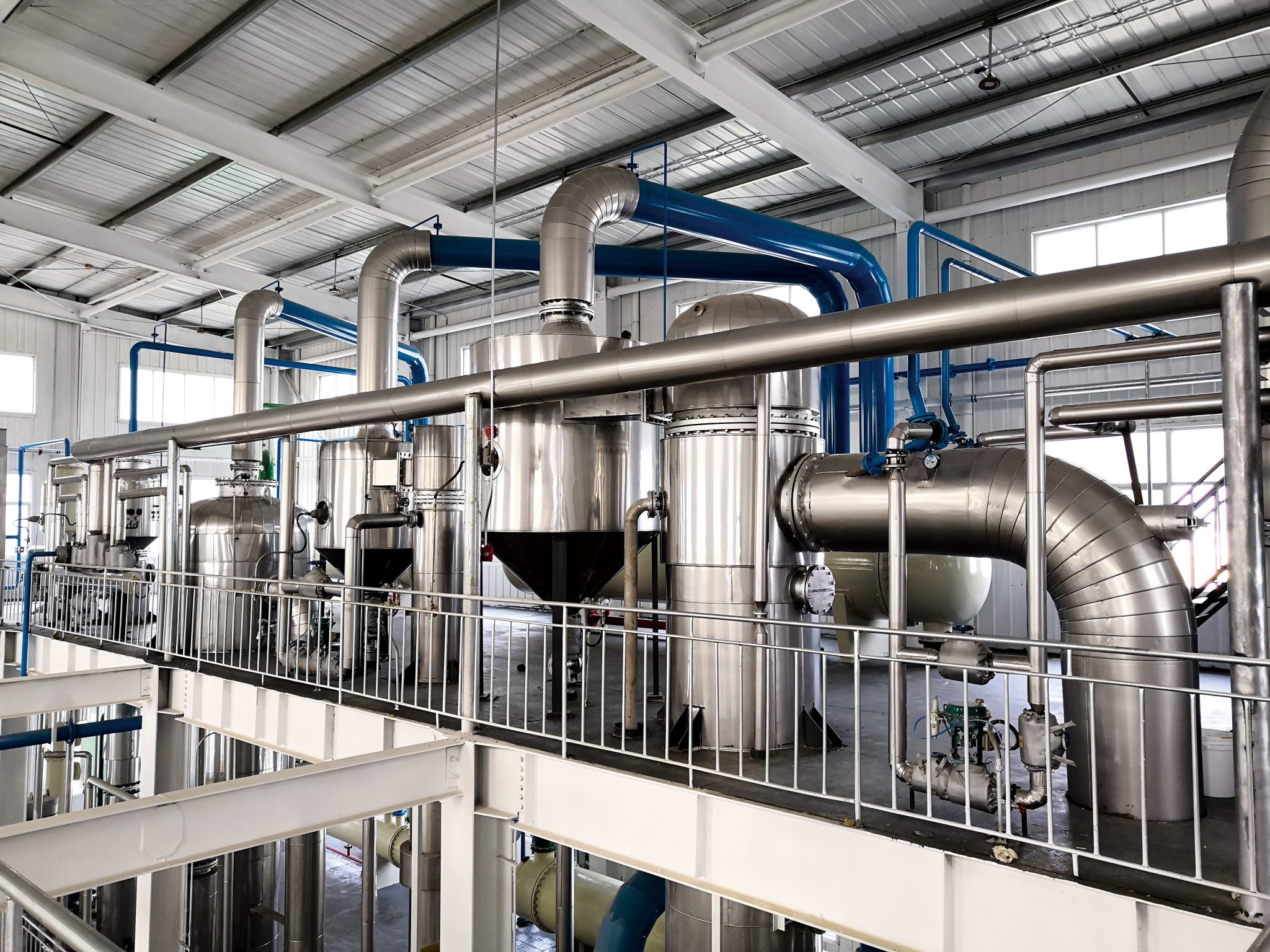
The flaked soybeans are mixed with a solvent, typically hexane, in an extraction vessel. Hexane has a high affinity for soybean oil and dissolves it from the soybean flakes. The mixture of hexane and oil is then separated from the remaining soybean meal using filtration or centrifugation.
Solvent Recovery and Oil Refining
The hexane is removed from the oil through a distillation process, leaving behind pure soybean oil. The hexane is also recovered from the meal and recycled, ensuring minimal waste and environmental impact. The crude soybean oil is then refined through steps like degumming, neutralizing, decolorizing, deodorizing, and dewaxing to produce a high-quality product.
Comparison of Extraction Methods
Mechanical Pressing vs. Solvent Extraction
| Feature | Mechanical Pressing | Solvent Extraction |
|---|---|---|
| Oil Yield | Lower yield (around 6% residual oil in meal) | Higher yield (less than 1% residual oil in meal) |
| Efficiency | Less efficient for large-scale production | Highly efficient, suitable for industrial-scale production |
| Process Complexity | Simpler process, fewer steps | More complex process involving solvents and distillation |
| Environmental Impact | Lower environmental impact due to no solvent use | Potential for air pollution if solvent emissions are not controlled |
| Oil Quality | Retains more natural nutrients and flavor | Requires refining to remove solvent residues and impurities |
Innovations and Sustainability in Modern Extraction

Advancements in Solvent Recovery Systems
Modern factories have developed advanced solvent recovery systems to minimize emissions and reduce environmental impact. These systems ensure that hexane is efficiently recovered and recycled, making the process more sustainable.
Utilization of Byproducts
The byproducts of soybean oil extraction, such as soybean meal and hulls, are also valuable. Soybean meal is a high-protein feed for livestock, while hulls can be used for biofuel production. This holistic approach to resource utilization enhances the overall sustainability of soybean oil production.
Low-Temperature Desolventizing
Innovations like low-temperature desolventizing have been introduced to preserve the protein content in soybean meal, making it suitable for human consumption and further processing into high-value products like textured protein.
Conclusion
The extraction of soybean oil in modern factories is a highly efficient and sophisticated process that has evolved significantly from ancient practices. Solvent extraction, with its high yield and scalability, has become the industry standard, supported by advanced technologies that ensure quality, safety, and sustainability. By understanding the detailed steps and innovations involved in soybean oil extraction, we can appreciate the efficiency and precision that go into producing this versatile oil.
If you would like to learn more, you can contact us.
FAQ
What are the main steps in modern soybean oil extraction?
The main steps in modern soybean oil extraction include cleaning and pre-treatment of soybeans, solvent extraction using hexane, solvent recovery, and oil refining through processes like degumming and decolorizing.
Why is solvent extraction preferred over mechanical pressing in modern factories?
Solvent extraction is preferred because it offers higher oil yield, lower residual oil in the meal, and is more efficient for large-scale production. It also allows for better preservation of protein in the meal.
How is the environmental impact of solvent extraction managed?
Modern factories use advanced solvent recovery systems to minimize emissions and recycle solvents like hexane. This reduces air pollution and enhances the overall sustainability of the process.
What are the byproducts of soybean oil extraction, and how are they used?
The main byproducts are soybean meal and hulls. Soybean meal is a high-protein feed for livestock, while hulls can be used for biofuel production. These byproducts contribute to the overall sustainability of the process.
Is the soybean oil extracted by solvent extraction safe for consumption?
Yes, the crude oil extracted by solvent extraction is refined to remove any solvent residues and impurities. The final product meets national standards for edible oil and is safe for consumption.