How to Reduce Solvent Loss in Edible Oil Extraction Plants
Core Summary
- Why solvent loss is one of the highest hidden costs in edible oil extraction
- How solvent loss impacts safety, operating cost, and plant compliance
- Which systems contribute most to solvent loss in extraction plants
- How engineered solutions can significantly reduce solvent consumption
Table of Contents
Introduction
Solvent loss is a persistent challenge in edible oil extraction plants, especially in continuous solvent extraction systems. While daily solvent losses may appear manageable, their long-term impact on operating cost, safety, and environmental compliance is often underestimated.
For plant owners and engineers, understanding how to reduce solvent loss is essential for improving profitability and maintaining stable production. This article explains where solvent loss occurs, why it happens, and how edible oil extraction plants can reduce solvent loss through engineering-focused solutions.
What Is Solvent Loss in Edible Oil Extraction?
Solvent loss refers to solvent that escapes the closed-loop extraction and recovery system through leakage, evaporation, or incomplete recovery. In most edible oil plants, hexane is used as the extraction solvent, making solvent containment a critical operational concern.
Even small inefficiencies in sealing or recovery can result in continuous solvent loss, increasing raw material cost and safety risk over time.
Visual element recommendation
Solvent circulation flow diagram showing potential solvent loss points across the extraction system.
Why Is Reducing Solvent Loss So Important for Plant Profitability?
Solvent represents a recurring operating expense rather than a one-time investment. High solvent loss directly increases production cost per ton of oil and reduces overall process efficiency.
In addition to cost, excessive solvent loss raises safety concerns and can complicate environmental compliance. Plants that control solvent loss more effectively operate with greater stability and predictability.
Where Does Solvent Loss Commonly Occur in Extraction Plants?
Solvent loss does not originate from a single point. It typically accumulates across multiple systems within the plant.
| Loss Area | Typical Cause | Operational Impact |
|---|---|---|
| Extractor seals | Wear or misalignment | Continuous leakage |
| Desolventizer vents | Incomplete condensation | Vapor loss |
| Evaporation system | Inefficient heat balance | Poor recovery |
| Piping connections | Aging gaskets | Safety risk |
| Storage tanks | Inadequate sealing | Emissions increase |
This table can be visualized as a solvent loss risk distribution chart for plant audits.
How Does Equipment Condition Affect Solvent Loss?
Equipment condition plays a decisive role in solvent containment. Worn seals, distorted flanges, and corroded pipelines create continuous micro-leaks that are difficult to detect during routine operation.
Regular inspection and timely replacement of critical components significantly reduce uncontrolled solvent release and improve system tightness.
How Can Process Design Reduce Solvent Loss?
Well-designed extraction systems minimize solvent exposure by maintaining balanced pressure, controlled temperatures, and efficient condensation.
Engineering decisions made during plant design, such as vapor path length, condenser capacity, and ventilation layout, directly influence solvent recovery efficiency. Plants with integrated process design typically experience lower solvent consumption over time.
Visual element recommendation
Process parameter comparison bar chart illustrating solvent loss under optimized and non-optimized system design.
Can Automation and Monitoring Help Control Solvent Loss?
Automation allows continuous monitoring of key parameters such as temperature, pressure, and vapor concentration. Deviations from normal operating ranges often indicate solvent leakage or recovery inefficiency.
By using automated alarms and trend analysis, plants can detect solvent loss early and correct issues before they escalate into major problems.
How Does Solvent Recovery Efficiency Influence Overall Loss?
Solvent recovery systems are responsible for condensing and recycling solvent vapor back into the extraction process. Inadequate recovery capacity or fouled heat exchange surfaces reduce recovery efficiency.
Maintaining clean condensers and properly balanced evaporation stages improves solvent recovery and lowers total solvent makeup requirements.
Visual element recommendation
Solvent recovery efficiency comparison chart showing recovery rate improvements after system optimization.
What Role Does Maintenance Strategy Play in Solvent Loss Control?
Reactive maintenance often addresses solvent loss only after it becomes visible or costly. Preventive and condition-based maintenance identify early signs of leakage, fouling, or wear.
Plants that adopt structured maintenance strategies typically achieve lower solvent loss, improved safety records, and longer equipment service life.
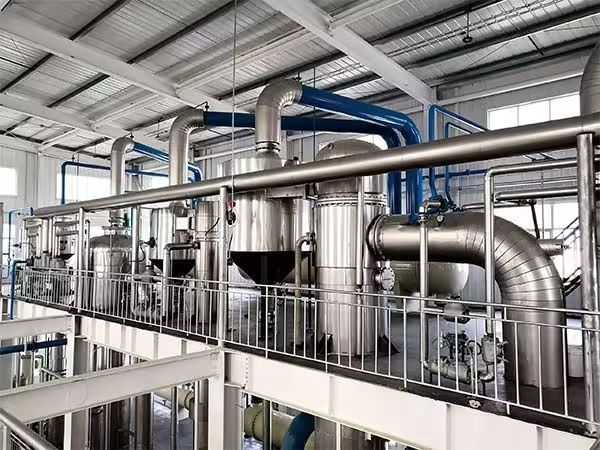
Is Reducing Solvent Loss Relevant for Both New and Existing Plants?
Solvent loss reduction is relevant across the entire plant lifecycle. New plants benefit from optimized design and modern sealing systems, while existing plants can achieve significant improvements through targeted upgrades and maintenance adjustments.
Even incremental improvements in solvent containment can deliver meaningful cost savings over time.
Conclusion
Reducing solvent loss in edible oil extraction plants is not only a cost-control measure but also a critical factor in plant safety and operational stability. By addressing equipment condition, process design, recovery efficiency, and maintenance strategy, plants can significantly lower solvent consumption and improve long-term performance.
FAQ
What causes solvent loss in edible oil extraction plants?
Solvent loss is caused by leakage, evaporation, and inefficient recovery within the extraction system.
Is solvent loss measurable in daily operation?
Yes. Solvent makeup rate and recovery efficiency provide measurable indicators.
Can solvent loss be reduced without major equipment replacement?
Yes. Maintenance optimization and process adjustments often deliver noticeable improvements.
Does solvent loss affect plant safety?
Yes. Excessive solvent emissions increase fire and environmental risk.
Is solvent loss reduction economically justified?
Yes. Lower solvent consumption directly reduces operating cost and improves profitability.
Concerned about high solvent consumption in your edible oil extraction plant?
Our engineering team specializes in solvent extraction system optimization, helping plants reduce solvent loss, improve safety, and lower operating costs. Contact us today to receive a professional assessment tailored to your plant configuration and production goals.