Solvent Extraction vs Mechanical Pressing for Edible Oil Production
Core Summary
- How engineering requirements drive the choice between solvent extraction and mechanical pressing
- Why continuous solvent extraction dominates industrial-scale edible oil production
- How raw material characteristics affect extraction system design
- What decision factors matter most in real edible oil projects
Table of Contents
Introduction
When planning an edible oil production project, the choice of extraction technology is not a theoretical debate. It is an engineering decision that directly affects oil yield, operating cost, plant layout, safety systems, and long-term return on investment.
Solvent extraction and mechanical pressing are the two most widely used oil extraction methods, but they serve very different project objectives. Understanding their differences from an engineering and system-integration perspective is essential for selecting the right solution for a specific production scenario.
This article analyzes solvent extraction vs mechanical pressing for edible oil production with a focus on practical plant design, scalability, and operational performance.

What Engineering Principles Define Mechanical Pressing Systems?
Mechanical pressing relies on physical force generated by screw presses to expel oil from oil-bearing materials. From an engineering standpoint, pressing systems are relatively compact and mechanically straightforward, making them suitable for small to medium production capacities.
However, pressing efficiency is inherently limited by material structure and frictional constraints. As throughput increases, energy consumption rises while residual oil content in the press cake remains comparatively high. These characteristics restrict the scalability of pressing-based systems in industrial applications.
Mechanical pressing systems are often selected for projects prioritizing simplicity, lower initial investment, or specialty oil positioning rather than maximum oil recovery.
Visual element recommendation
Mechanical pressing process flow diagram illustrating material feed, pressing zone, oil discharge, and cake outlet.
How Does Solvent Extraction Technology Work at an Industrial Scale?
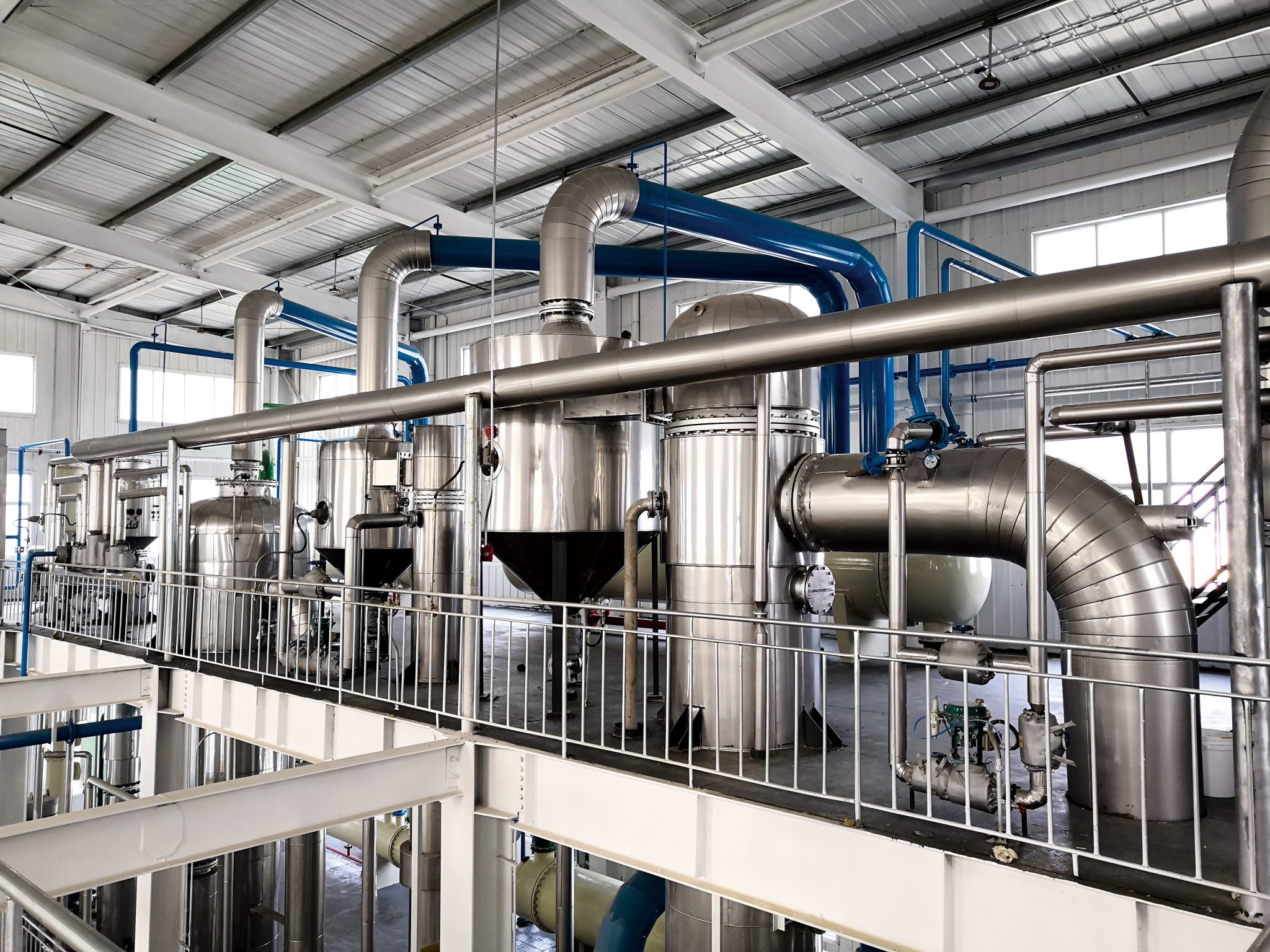
Solvent extraction removes oil by dissolving it into an organic solvent, typically hexane, followed by solvent recovery and reuse. At an engineering level, the effectiveness of this method depends on continuous material flow, controlled solvent distribution, and efficient vapor recovery.
Modern solvent extraction systems are designed to handle a wide range of raw materials, including pre-pressed seed cakes, soybean flakes, and high oil-content seeds such as peanuts, rapeseed, sunflower seeds, and cottonseeds. Proper system design ensures stable operation even when raw material characteristics vary.
Continuous solvent extraction represents the most advanced and widely adopted approach for large-scale edible oil production due to its ability to deliver uniform extraction and predictable performance.
Visual element recommendation
Continuous solvent extraction process flow diagram highlighting extractor, desolventizer, evaporation, and solvent recovery sections.

Why Does Oil Yield Drive Most Engineering Decisions?
Oil yield directly determines raw material utilization efficiency and overall plant economics. Mechanical pressing typically leaves a higher percentage of residual oil in the meal, which becomes increasingly significant at larger production volumes.
Continuous solvent extraction achieves much lower residual oil levels by ensuring thorough solvent contact and controlled residence time. From an engineering perspective, this higher extraction efficiency justifies the additional system complexity in medium to large-capacity plants.
| Extraction Method | Typical Residual Oil Level |
|---|---|
| Mechanical pressing | Higher |
| Continuous solvent extraction | Lower |
This comparison is well-suited for a yield performance bar chart to support decision-making.
How Do Operating Costs Compare from a System Perspective?
While mechanical pressing systems require lower initial investment, their operating cost per ton of oil often increases with scale due to energy consumption and lower oil recovery.
Solvent extraction systems involve higher upfront engineering and installation costs, but their continuous operation, automated material handling, and optimized solvent recovery significantly reduce labor demand and oil loss. At industrial scale, these factors result in lower unit production costs and more stable long-term operating economics.
Why Is Continuous Solvent Extraction More Adaptable to Multiple Raw Materials?
One of the key engineering advantages of well-designed solvent extraction systems is flexibility. Extraction sections can be configured to process different oilseeds without major structural changes, allowing plants to respond to market demand or seasonal raw material availability.
This adaptability reduces downtime associated with process changeovers and enables producers to maximize asset utilization. From a project planning perspective, such flexibility adds resilience to long-term plant operation.
Visual element recommendation
Equipment layout 3D schematic showing modular extraction sections and material flow paths.
How Do Maintenance and Reliability Influence Technology Selection?
Maintenance strategy plays a critical role in extraction system reliability. Mechanical pressing systems experience higher mechanical wear due to continuous friction and pressure, leading to frequent component replacement.
Continuous solvent extraction systems, when properly engineered, distribute mechanical loads more evenly and operate under stable conditions. Simplified access to key components and reduced wear-prone zones contribute to predictable maintenance schedules and lower unplanned downtime.

How Do Safety and Environmental Requirements Affect System Design?
Mechanical pressing systems involve fewer flammable materials and simpler safety management. Solvent extraction systems require comprehensive vapor containment, ventilation, and solvent recovery engineering.
Modern solvent extraction plants integrate safety controls, monitoring systems, and solvent recovery technologies that meet strict industrial standards. In practice, system design quality has a greater impact on safety performance than the extraction method itself.
Which Technology Delivers Better Long-Term Project Value?
From an engineering project perspective, long-term value depends on production scale, raw material cost, market positioning, and operating stability. Mechanical pressing may offer faster deployment for small projects, but continuous solvent extraction delivers superior performance in industrial applications.
Plants designed around continuous solvent extraction are better positioned to achieve high oil yield, lower operating costs, and stable production over extended operating cycles.
| Project Objective | Recommended Technology |
|---|---|
| Small capacity | Mechanical pressing |
| Large industrial capacity | Continuous solvent extraction |
| Maximum oil recovery | Continuous solvent extraction |
| Multi-seed processing | Continuous solvent extraction |
| Long-term cost efficiency | Continuous solvent extraction |
Conclusion
Solvent extraction and mechanical pressing are not competing technologies but tools suited to different engineering objectives. Mechanical pressing supports simplicity and small-scale production, while continuous solvent extraction enables high-efficiency, large-scale edible oil manufacturing.
For projects focused on yield optimization, scalability, and long-term operational stability, continuous solvent extraction is the preferred engineering solution.
FAQ
What is the main engineering difference between solvent extraction and mechanical pressing?
Solvent extraction relies on chemical dissolution and recovery, while pressing uses mechanical force.
Which method is more suitable for industrial-scale edible oil plants?
Continuous solvent extraction is more suitable due to higher efficiency and scalability.
Can both technologies be combined in one project?
Yes. Pre-pressing followed by solvent extraction is commonly used.
Does solvent extraction support food-grade oil production?
Yes, when designed and operated according to industry standards.
Which method offers better long-term cost control?
Solvent extraction generally offers better cost control at scale.
Planning an edible oil production project and unsure which extraction technology fits your goals?
Our engineering team specializes in designing and delivering continuous solvent extraction solutions tailored to raw materials, capacity requirements, and long-term operational objectives. Contact us today for a professional evaluation and a solution built for sustainable performance.